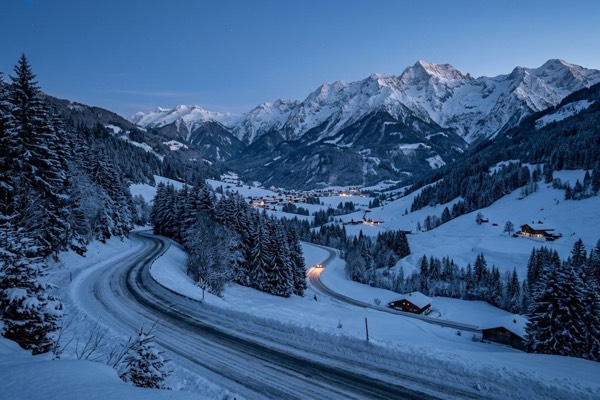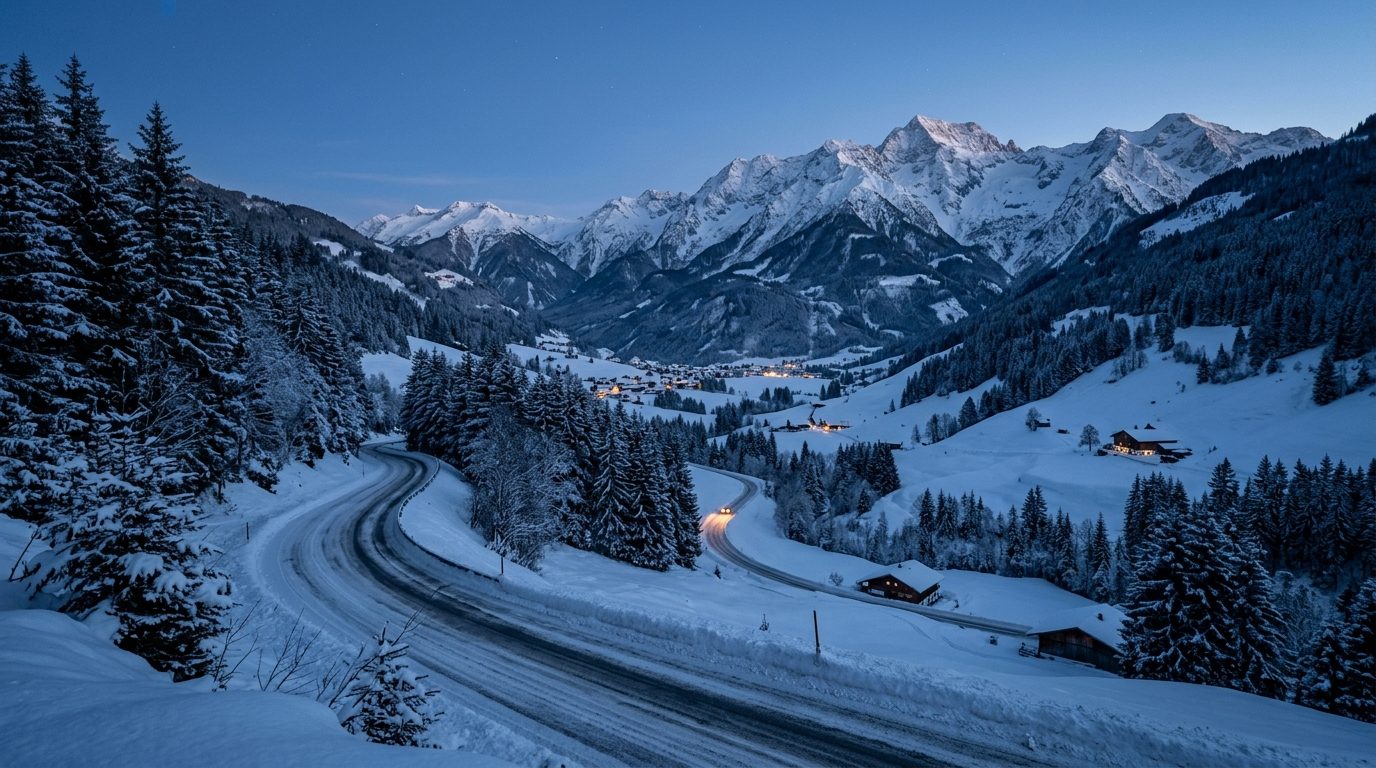
If you are driving yourself into the Alps from Munich, the paperwork and the tyres matter more than the route. Austrian, Swiss and Italian rules differ from German ones and from each other, and enforcement in winter is real rather than theoretical.
Motorway vignettes: Austria and Switzerland
Germany has no car toll. Austria and Switzerland both do, and both work on a windscreen sticker rather than a barrier.
- Austria: a vignette is required on every motorway and expressway. Ten-day, two-month and annual versions are sold; a digital vignette is available and is tied to the number plate.
- Switzerland: one annual vignette only, valid for the calendar year plus the December either side. There is no short-stay option, so a single crossing costs the full price.
- Italy: no vignette. Motorways are tolled at barriers, so you take a ticket and pay on exit.
Tolls on top of the vignette
An Austrian vignette does not cover everything. Several alpine routes carry a separate charge, and the Brenner is the one most people meet.
- Brenner motorway (A13): a separate toll each way, on top of the vignette.
- Tauern, Karawanken and Arlberg road tunnels: individually tolled.
- Italy: the A22 south of the Brenner is a normal ticketed autostrada.
- Switzerland: no additional tolls, but the Vereina car-train through to the Engadin is charged per vehicle.
Winter tyres: the rule that is not a date
Germany and Austria both use a conditional rule rather than a fixed season, and people routinely misread it.
In Germany, winter tyres are required whenever conditions are wintry — ice, snow, slush, frost. Not "in winter": in those conditions. Austria is stricter: from 1 November to 15 April, in wintry conditions, cars must either have winter tyres on all four wheels or chains fitted to the driven axle.
Tyres must carry the alpine symbol (a three-peak mountain with a snowflake). The older M+S marking alone is no longer sufficient in either country. Driving without them in snow risks a fine, and — more expensively — your insurer taking an interest after a claim.
Snow chains
Chains are not required everywhere, all the time. They are required where a blue sign with a tyre-and-chain symbol says so, and those signs appear on specific valley and pass roads when conditions demand.
- Carry a set that fits your rental if you are going above about 1,200 m.
- Fit them before the climb, in a lay-by, not halfway up on a gradient.
- Practise once in daylight. The first attempt in the dark, in snow, with cold hands, takes three times as long.
- Chains have a speed limit, usually 50 km/h. Remove them once the road is clear or you will ruin them and the road surface.
Which passes close, and when
High passes shut for the season. This is the detail that catches out anyone planning a route from a summer map.
| Pass | Winter status |
|---|---|
| Brenner (1,370 m) | Open all year — the lowest major crossing and a freight artery |
| Reschen (1,504 m) | Open all year, cleared as a priority |
| Arlberg road pass (1,793 m) | Closes in severe weather; the tunnel below stays open |
| Flexen (to Lech and Zürs) | Closes for avalanche control, sometimes for hours |
| Timmelsjoch (2,474 m) | Closed roughly late October to late May |
| Stelvio (2,757 m) | Closed roughly November to late May |
| Foscagno (to Livigno, 2,291 m) | Open, but exposed and held for snow clearance |
A satellite navigation system will happily route you over the Stelvio in January. Check the national road services — ASFINAG in Austria, TCS in Switzerland — on the morning you travel, not the week before.
A short pre-departure list
- Vignette bought and displayed, or the digital one registered to the plate.
- Alpine-symbol winter tyres on all four wheels.
- Chains in the boot, and you have fitted them once.
- Passport or ID card for everyone — Schengen crossings are open, but spot checks happen.
- A full tank. Fuel in a resort valley costs more and the stations close early.
- A physical route plan that does not rely on a pass being open.
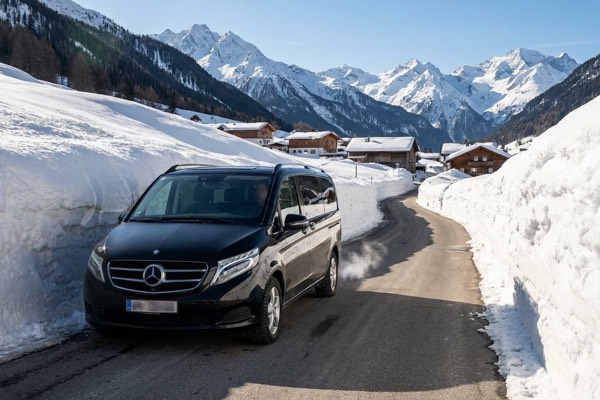
If that list reads like a lot of work for one journey, that is the honest case for being driven instead. All of the above is included in a transfer fare, and someone else fits the chains.